
Thermal Label Benefits and Uses
Inventor Joe Woodland drew the first barcode in the sand in Miami Beach as he tried to come up with a way to help grocery stores process customers faster.
Once this invention was established, the next hurdle was finding inexpensive ways to print the images with precise edges and customization. This is where thermal labels come in.
Read on for everything you need to know about thermal labels, their uses, and their benefits.
What Are Thermal Labels?
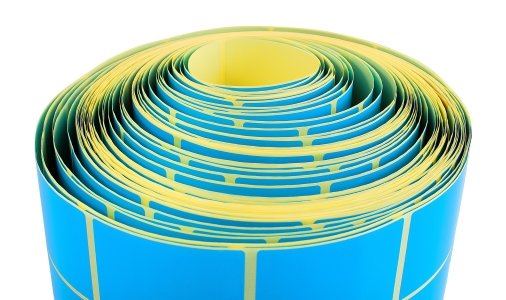
Thermal labels are printed by thermal printers without using ink, toner, or ribbon. This makes them a less expensive option than other types of printing. The images produced are nice and sharp, with precise edges, and they are highly customizable.
The Top 4 Benefits of Thermal Labels
Let’s take a closer look at the top four benefits of using a thermal printer.
1. Faster Print Speed
With ink printers, it takes a few seconds for the printer to put the ink on the page. Although it may not seem like a long time, added up, this can be hours of wasted time in a day.
A thermal printer requires no ink, so images are made in a fraction of the time.
The retail benefits are huge. Faster checkout lines, faster shipping times, more customers served, more goods sold, and more work done by employees in the same amount of time.
2. Less Expensive
Most printers require you to purchase either ink cartridges or ribbons, and those costs can really add up. Even the cheapest ink refills, at about $9 an ounce, cost as much as fine champagne, while the priciest cartridges, at about $75 an ounce, are more expensive than Chanel No. 5 perfume. Those refills cost over $1,100 per gallon! Think of that the next time you feel that gas prices are outrageous.
Even worse, some of that costly ink never even makes it onto your paper. It’s used for cleaning the print heads and other maintenance tasks.
A thermal printer is inkless. It uses heat to print images on the paper. By eliminating the need to replenish ink supplies, you’ll save thousands of dollars. Not to mention you’ll prevent a bunch of cartridges ending up in our landfills.
3. Less Maintenance
Thermal printers don’t have as many moving parts as conventional printers, so they are less likely to break. And if something does go wrong on a thermal printer, it’s often easier, faster, and cheaper to repair.
4. Better Quality Printing
You must have noticed that when ink is running low, the image is difficult to read. Conventional ink‑jet printers are also prone to smudge if you touch the page while it’s still wet.
Thermal transfer printing doesn’t use ink, so there is no chance of faded or smeared text. You get clear, long‑lasting images that can withstand UV rays and can even handle some water damage.
The Top 6 Uses of Thermal Labels
Now that we’ve explained the benefits of thermal printing, let’s look at some of the common uses for thermal labels.
1. Shipping Labels
Shipping labels are one of the items that most commonly use thermal printer paper. Labels can show barcodes, the shipper, recipient, and other shipping information, like how the package should be handled, stored, and delivered.
The high‑quality images on thermal labels mean that barcodes and addresses are easily read by hand‑held devices and by shipping personnel.
The thermal printer paper ensures that the label remains crisp even when subject to heat, cold, or rain.
2. Pharmaceutical Labels
Pharmaceutical labels are a type of documentation that must be done right. A lot is at stake with anything pharmaceutical in nature, which is why there are many regulations about packaging and labeling these products.
Pharmaceutical labels may show information such as expiration dates, batch numbers, and dosage information.
Millions of these labels are printed daily. A fast, efficient printing option such as thermal printers is a good way to keep up with the huge demand.
3. Price Tags
Imagine the hundreds of millions of items for sale in retail stores across the world. They all have one thing in common? A price tag!
Every piece of merchandise is tagged with a price, an item code, the size, and other information that identifies the product. Retail stores with high inventory turnover may be required to print hundreds of price tags each month. These stores need a printing option that’s both accurate and cost effective.
4. Food Packaging
Food and beverage companies use appealing food labels as part of their marketing strategy. Thermally printed food labels are a cost‑effective and attractive way to meet food labeling requirements.
5. Barcode Labels
These days, virtually every product sold anywhere has a barcode label. For retail businesses, they speed up inventory tracking and improve sales efficiency. Warehouses and manufacturers also use barcode labels in enormous quantities. Learn how to choose the barcode label for your needs.
The biggest downside to barcodes is when they don’t scan. The barcode might be up to 12 numbers long, so if a cashier needs to manually type these numbers, it can take time. Using thermal labels guarantees razor‑sharp edges for a barcode that scans, every time.
6. Product Labels
Besides pricing information, product labels can provide information such as a serial number, model number, batch number, and so on.
Items stored in warehouses may have inventory identification labels to help keep inventory correct. Labels can also be used in quality‑control or assembly‑line scenarios.
Read why proper product labels matter so much.
Thermal Label Solutions
The applications for thermal labels are nearly infinite. Although a thermal printer may cost more than another type of printer at first, the time‑saving benefits and no need for replacement cartridges make thermal printers the economical choice.
If you count things, we can help. Contact us today.